
A New Eurasian Transport Association Emerges: Four Nations Unite to Strengthen Asia–Europe Rail and Land Corridors
Source: TRACECA
12/10/20252 min read
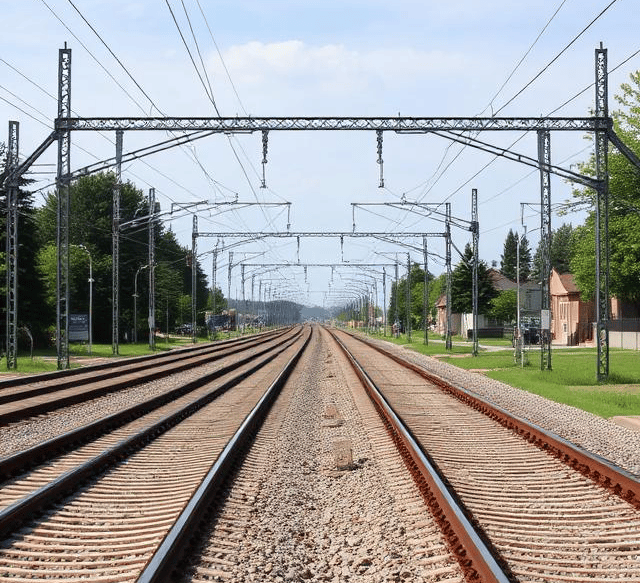
Azerbaijan, Kyrgyzstan, Tajikistan, and Uzbekistan have jointly launched a new Eurasian Transport Association, marking a significant development in the evolving landscape of transcontinental freight logistics. This new alliance seeks to strengthen Asia–Europe rail and land connectivity by improving corridor efficiency, increasing capacity, and harmonizing cross-border transport rules. For years, Central Asia has sat at the heart of Eurasian transit geography but lacked a fully unified institutional mechanism to coordinate infrastructure planning, customs processes, and operational standards. By establishing this new association, the four participating states aim to leverage their strategic positions along major transport routes such as the Middle Corridor, the Central Asia–South Caucasus link, and the China–Kyrgyzstan–Uzbekistan axis. The move reflects a growing recognition that regional coordination is essential to compete with more established Eurasian routes, particularly those dominated by Russia, while meeting rising global demand for resilient supply chains that diversify away from geopolitical bottlenecks.
The formation of the Eurasian Transport Association also responds to the logistical pressures and opportunities generated by rising trade volumes across Central Asia. Since the early 2020s, freight transported via land-bridge corridors connecting East Asia to Europe has steadily increased, driven by disruptions to maritime supply chains and a global push toward multi-modal diversification. However, inconsistent infrastructure standards and fragmented customs procedures have often stalled the region’s ability to capture a larger share of global transit traffic. The new association aims to tackle precisely these obstacles through coordinated investment planning, unified digital-transport systems, and streamlined border procedures. With Azerbaijan already expanding its capacity at the Port of Alat, Kyrgyzstan pursuing upgrades to mountain rail crossings, Uzbekistan investing heavily in freight terminals and electrification efforts, and Tajikistan enhancing road-rail interoperability, the four nations see cross-border alignment as the next step in converting national investments into a cohesive continental corridor. Furthermore, the association is expected to engage closely with international partners — the EU, Türkiye, China, and multimodal operators — to secure funding, enhance technology adoption, and embed the region more firmly into global logistics networks.
Beyond infrastructure and regulatory harmonization, the new Eurasian Transport Association carries broader geopolitical and economic implications that could reshape the strategic value of Central Asia’s transport landscape. By acting collectively, the four countries aim to strengthen their bargaining power in global freight diplomacy, negotiate more favorable transit agreements, and set higher standards for efficiency and transparency — all of which directly influence the competitiveness of their corridors. Enhanced rail-land integration could significantly reduce freight transit times between China, Central Asia, the South Caucasus, and Europe, offering a viable alternative to longer maritime routes and congested land crossings. At the same time, improved connectivity promises direct economic benefits for the member states: increased customs revenues, job creation in logistics and warehousing, stronger export capabilities for agricultural and industrial goods, and growth of regional trade hubs. Importantly, the association is designed not only as a political gesture but as a technical and operational platform — one that will oversee digital tracking systems, tariff coordination, research initiatives, and the deployment of new technologies including real-time cargo monitoring and automated border-clearance tools. If implemented effectively, the Eurasian Transport Association has the potential to transform Central Asia from a transit region into an integrated, competitive, and strategically essential bridge between East and West.