
Bridging Continents on Steel Rails: The Strategic Rise of the China–Europe Freight Network
Source: Gloabal times
11/28/20252 min read
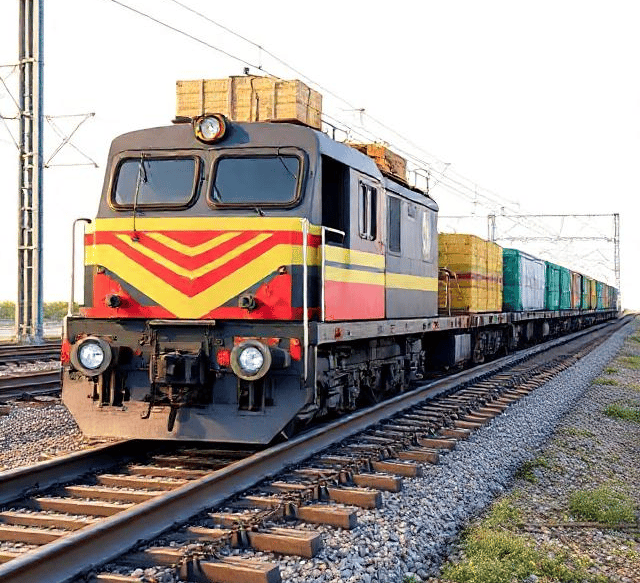
The China–Europe freight train network has reached a defining milestone, surpassing 120,000 cumulative trips and transporting goods valued at more than US $490 billion, according to reporting from Global Times. This achievement is more than a numerical benchmark—it represents a fundamental realignment in global logistics, where rail has become a vital artery linking the manufacturing hubs of East Asia with the consumer and industrial markets of Europe. Over a decade of rapid development, the network has expanded from a limited set of pilot routes to a vast corridor system covering more than 200 cities in Europe and over 100 in China. What began as an experiment in long-distance rail freight has matured into a strategic, resilient, and increasingly indispensable component of Eurasian trade. This evolution has been driven by a combination of geopolitical ambition, infrastructure investment, and the steady performance advantages that rail offers over maritime and air transport.
Central to this growth is the network’s ability to fill a unique logistical niche. Rail freight provides a middle path between the speed of air cargo and the cost-efficiency of sea shipping. With transit times typically ranging from 12 to 20 days—less than half that of maritime routes—the service appeals strongly to industries such as automotive, electronics, fashion, and chemicals, where delivery speed directly influences production continuity and retail agility. In addition, the rail network has proved particularly valuable during global supply-chain disruptions, notably during the pandemic when ports faced congestion and air freight capacity collapsed. The resilience of the China–Europe rail corridor allowed manufacturers to sustain operations and maintain delivery schedules, reinforcing confidence in rail as a strategic alternative rather than a supplementary mode. As Global Times highlights, the cumulative value of transported goods reflects not only scale but also the growing sophistication of cargo: from raw materials to high-value components and finished products. The network's multimodal integration—linking rail with road, sea, and inland waterway services—has further amplified its utility, enabling door-to-door logistics solutions across a diverse geography.
Looking ahead, the implications of this milestone extend well beyond freight volumes or economic metrics. The continued expansion and consolidation of the China–Europe freight system signal a larger structural shift in Eurasian connectivity. Investments in border-crossing capacity, digital customs systems, and intermodal terminals across Kazakhstan, Russia, Belarus, and Europe are laying the groundwork for even greater efficiency and reliability. At the same time, competition among routes—such as the Middle Corridor via Central Asia and the Caucasus—is intensifying, driven by geopolitical realignments and market demand for diversified transport pathways. For Europe, the rail link strengthens supply-chain resilience and deepens commercial ties with Asian partners; for China, it enhances the Belt and Road Initiative’s logistical backbone and reinforces its role as a global manufacturing and trade center. Environmental benefits also play a growing part in the system's appeal: rail freight emits significantly less CO₂ than air or long-distance trucking, aligning with Europe’s decarbonization strategies and the global push toward sustainable logistics. As the network advances into its next phase, the 120,000-trip landmark stands as a clear indicator of how rail is reshaping intercontinental trade—and why it will remain a cornerstone of Eurasian economic integration in the years ahead.