
China Advances Integrated Transport Strategy: Air‑Rail Inter‑Modal Task List and a New International Rail Freight Treaty
Source: CAAC china - UNICEF
11/5/20252 min read
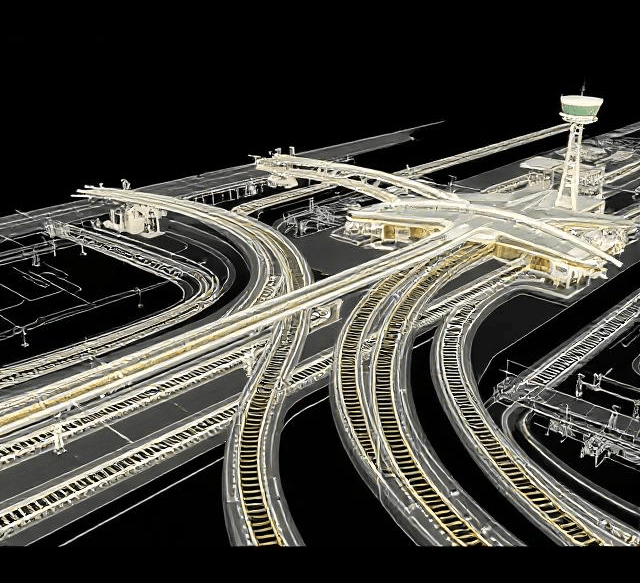
China is taking bold steps to advance integrated transport development with the joint release of the Key Task List for Promoting High‑Quality Development of Air‑Rail Inter‑modal Transport (2025‑2027) by the Civil Aviation Administration of China (CAAC) and China State Railway Group Co., Ltd. The Task List outlines a comprehensive set of objectives aimed at harmonising air and rail networks to facilitate smoother, faster, and more efficient passenger and freight movement across the country. It identifies 15 critical tasks covering infrastructure development, service coordination, pilot projects, standardisation, information sharing, and technical support, marking a decisive move toward fully integrated multi-modal transport systems. By establishing co-located hubs, streamlining station layouts, and enabling real-time data integration, the initiative seeks to overcome long-standing bottlenecks in transfers and connectivity. The strategy builds upon prior cooperation agreements and positions China as a leader in intermodal transport innovation, reflecting a national vision that links transport efficiency with economic development, environmental sustainability, and enhanced social mobility. The Task List also anticipates supporting the growing demand for domestic travel and freight logistics, offering a scalable framework adaptable to regional and urban development priorities.
The initiative focuses on ensuring both “hard” and “soft” connectivity between air and rail services. Physical infrastructure improvements include optimising airport and railway station layouts, developing multi-modal transfer hubs, and synchronising schedules to reduce waiting times. Meanwhile, institutional measures aim to unify ticketing, reservations, and information platforms to offer passengers seamless transitions between modes. For example, integrating airline booking systems with China’s national rail platform allows travellers to plan trips that combine flights and high-speed rail journeys in a single itinerary. Similarly, freight operators can benefit from streamlined documentation, scheduling, and coordination across modes, reducing transit time and costs. By combining operational, technological, and regulatory measures, the policy promotes not only convenience but also sustainability, encouraging the use of rail — a lower-emission mode — for longer segments of passenger and cargo transport. Experts note that the approach could reduce congestion at airports, improve logistics efficiency, and serve as a model for other countries seeking to optimise multi-modal transportation systems.
On the international front, China has strengthened its regulatory footprint by signing the Convention on the Contract for the International Carriage of Goods by Rail alongside Germany and other partner states. This treaty harmonises legal frameworks for cross-border rail freight, replacing fragmented national rules with a consistent set of regulations governing the rights and obligations of shippers, carriers, and consignees. By ensuring uniformity in contracts, liability, and operational standards, the treaty mitigates administrative burdens and legal uncertainties that have historically slowed the growth of international rail cargo. The agreement complements China’s Belt and Road and Eurasian rail corridor initiatives by facilitating smoother flows of goods between Asia and Europe. Together with the domestic air-rail integration strategy, these developments underscore China’s dual-track approach: enhancing national transport efficiency while expanding its influence in international logistics and regulatory leadership. For industry stakeholders, including airlines, freight operators, infrastructure developers, and technology providers, these measures create opportunities for investment, collaboration, and innovation, while signalling clear regulatory expectations for system interoperability, data integration, and service standardisation.