
CIS-CRT Rail Cargo Surpasses U.S. and EU: A Shift in Global Freight Dynamics
Source: trend
11/27/20252 min read

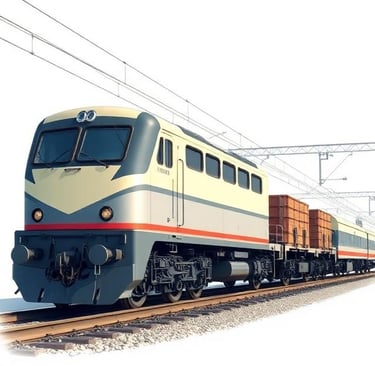
Rail cargo turnover across the member countries of the Commonwealth of Independent States Council for Rail Transport (CIS‑CRT) has reached a historic milestone, now exceeding that of the United States and the European Union combined. This remarkable growth underscores the strategic importance of rail networks in the Eurasian region and highlights the increasing reliance on rail transport to move freight efficiently across vast distances. The surge in cargo throughput is driven by a combination of infrastructure modernization, investment in rolling stock, and the development of major trans‑Eurasian corridors such as the Trans-Caspian and the Middle Corridor connecting China to Europe. Analysts note that this shift is not only transforming regional logistics but also influencing global supply-chain strategies, as businesses seek alternatives to congested maritime and road routes.
Several factors have contributed to this unprecedented growth in CIS‑CRT rail freight. First, substantial investment in rail infrastructure has enhanced capacity, reliability, and safety, allowing trains to carry heavier loads at higher speeds. Key modernization projects include electrification of major lines, expansion of double-track routes, and upgrades to terminals and cargo handling facilities. Second, policy coordination among CIS member states has streamlined customs procedures and border operations, reducing transit times and improving the predictability of rail shipments. Third, the rise in global demand for efficient and sustainable freight solutions has prompted shippers to increasingly favor rail over long-haul trucking or slower maritime routes, particularly for high-value or time-sensitive goods. Together, these developments have enabled the CIS‑CRT region to position itself as a competitive, high-volume freight corridor on the global stage.
The implications of this growth extend beyond regional logistics and have significant strategic, economic, and environmental dimensions. Economically, the expansion of rail cargo capacity stimulates trade, supports local industries, and generates employment opportunities in transport, logistics, and infrastructure sectors. Strategically, the CIS‑CRT corridors strengthen connectivity between Asia and Europe, offering reliable alternatives to congested seaports and highway networks. Environmentally, rail transport offers a lower-carbon alternative to road freight, contributing to the reduction of greenhouse gas emissions along high-traffic routes. Furthermore, the increasing role of CIS‑CRT in global freight highlights the importance of international cooperation in rail operations, interoperability, and standardization, which are critical for sustaining growth. As the CIS‑CRT rail network continues to expand and modernize, it is expected to play a pivotal role in shaping the future of global freight transport, demonstrating how strategic investments in rail can deliver both economic and environmental benefits while redefining traditional logistics paradigms.