DB Cargo Unveils Europe’s First Automated Freight Locomotive: A New Era for Rail Logistics
Source: DB Cargo
11/16/20252 min read
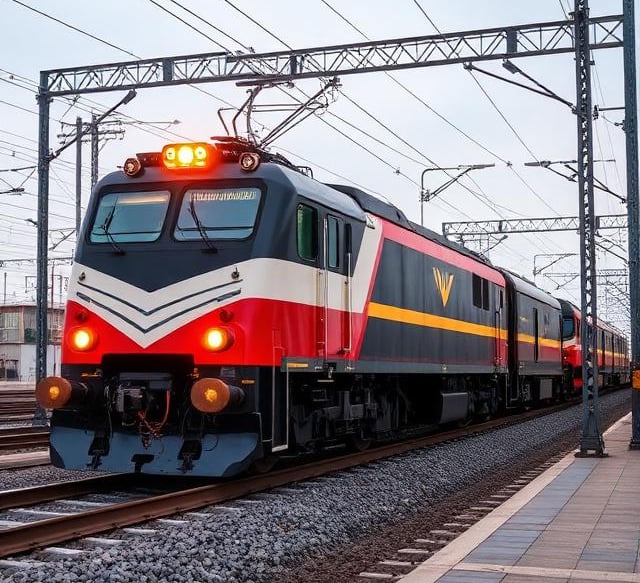

DB Cargo’s launch of Europe’s first automated freight locomotive marks a major milestone in the evolution of rail logistics and the broader digital transformation of the transport sector. The locomotive, which will be tested on the Betuweroute in the Netherlands—a key freight corridor linking Dutch ports with the European hinterland—integrates Automatic Train Operation (ATO) and Remote Train Operation (RTO) technologies. These systems are designed to assist or even partially replace manual driving tasks, offering consistent driving profiles, optimized braking, and improved energy efficiency. By introducing automation to freight operations, DB Cargo aims to address several structural challenges in rail logistics, including driver shortages, operational inefficiencies, and the need for more precise traffic management on increasingly congested networks. The project reflects Deutsche Bahn’s broader strategy to modernize and digitize its freight division, positioning rail as a stronger competitor to road transport by enhancing reliability, reducing delays, and creating a more predictable logistics chain for customers.
The pilot project on the Betuweroute provides an ideal testing environment because the corridor already features advanced signaling and traffic management systems, making it well suited for the deployment of next-generation automation technologies. ATO allows the locomotive to control acceleration, cruising, and braking, delivering smoother and more consistent operations than manual driving typically allows. This improves not only punctuality but also reduces energy consumption and wear on mechanical components, creating long-term cost savings. Meanwhile, RTO enables remote supervision and, in certain scenarios, remote control of the locomotive, opening possibilities for safer operation in yards, terminals, and complex freight-handling zones. The combined use of ATO and RTO can help minimize human error, support real-time operational decisions, and improve the overall flow of freight traffic. DB Cargo emphasizes that automation is not meant to replace human expertise entirely; instead, it supports drivers by handling repetitive tasks, allowing staff to focus on safety, oversight, and strategic decision-making. The pilot is expected to provide valuable data on how freight automation can be integrated into existing European corridors without compromising safety or interoperability.
The introduction of an automated freight locomotive also has significant implications for the future of rail freight policy, industry standards, and cross-border collaboration in Europe. As the EU continues to advocate for a modal shift from road to rail to meet its climate and sustainability targets, technological innovation will be crucial to boosting rail’s competitiveness. Automated freight operations could enable longer trains, closer running intervals, and improved capacity on busy routes, allowing rail to handle more goods without requiring extensive new infrastructure. This aligns with the ambitions of the European Rail Traffic Management System (ERTMS) and the push toward greater digital integration across national networks. However, the success of automation will depend on coordinated efforts among infrastructure managers, regulators, unions, and technology suppliers to ensure harmonized rules, shared safety frameworks, and robust training programs for staff. DB Cargo’s pilot represents an important first step in demonstrating the feasibility of automation at scale. If the trial on the Betuweroute proves successful, it could pave the way for wider deployment across European freight corridors, reshaping the future of rail logistics and reinforcing rail’s position as the backbone of sustainable goods transport in Europe.