EU–OTIF Alignment: How Europe Shapes the Future Technical Framework of International Rail Transport
Source: OTIF
12/9/20253 min read
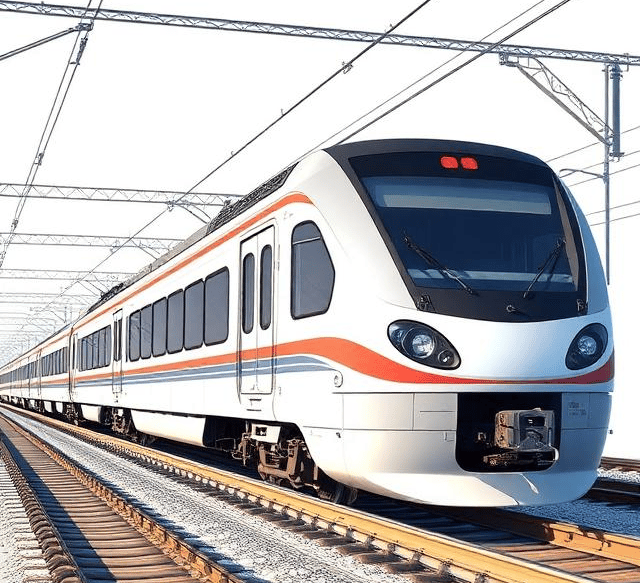
The June 2025 decision by the Council of the European Union to define the EU’s position for the 17th session of OTIF’s Committee of Technical Experts (CTE) represents a major convergence point between European rail policy and the wider international regulatory landscape. OTIF—responsible for harmonising rules governing international carriage by rail across more than 50 member states—plays a crucial role in ensuring that trains, infrastructure, and operational procedures remain interoperable across borders. By formally adopting a detailed position in advance of the CTE meeting, the EU signalled a strategic intent: to ensure that technical revisions within OTIF’s Uniform Technical Rules (UTRs) remain aligned with, and complementary to, the EU’s own Technical Specifications for Interoperability (TSIs). The Council’s mandate covered a broad range of topics including rolling-stock technical prescriptions for locomotives and passenger coaches, infrastructure standards, accessibility for persons with reduced mobility (PRM), vehicle marking, and telematics applications for freight transport. Each of these areas is fundamental for a seamless and safe European rail system, and by intervening early in the OTIF process, the EU strengthened the likelihood that non-EU OTIF members adopt compatible or harmonised standards, ultimately benefiting international freight corridors and long-distance passenger services.
This coordinated approach reflects the practical reality that European rail operations rarely end at the EU’s external border. Freight from EU ports often travels deep into Asia or the Middle East via OTIF member states; similarly, trains from Turkey, the Western Balkans, or the Caucasus regularly enter EU networks. Without harmonised technical rules, each border crossing could require changes in locomotives, documentation, software systems, or even operational practices—adding cost, delays, and complexity. By shaping OTIF’s technical agenda, the EU ensures that as OTIF updates standards for rolling-stock design, vehicle numbering, infrastructure interfaces, and telematics systems, they remain interoperable with the European Rail Traffic Management System (ERTMS), TAF-TSI for freight data exchange, and PRM-TSI for accessibility. For example, revising the rules on telematics applications is essential for digital freight: modern logistics depend on real-time wagon tracking, automated data sharing, and harmonised documentation. Without compatible digital systems, freight trains moving between EU and non-EU territories would face operational barriers. Similarly, updates to standards for persons with reduced mobility are not merely technical—they reflect broader political commitments toward inclusivity, ensuring that international passenger services do not have widely varying accessibility levels. When OTIF aligns PRM rules with EU requirements, passengers benefit from a consistent and predictable experience, regardless of which country their journey crosses through.
The Council’s decision also highlights the increasing geopolitical significance of rail standardisation. As global supply chains evolve and more countries invest in rail as a low-carbon freight alternative, the importance of interoperability across long corridors grows exponentially. The EU’s involvement in OTIF ensures that its regulatory philosophy—safety-oriented, data-driven, and strongly environmentally focused—extends beyond its immediate territory. At the same time, this coordination helps avoid duplication of work, regulatory fragmentation, or conflicting standards between EU legislation and OTIF’s UTR framework. It also strengthens Europe’s credibility in international railway governance: by participating actively in OTIF’s technical processes, the EU positions itself not just as a regional rail authority, but as a shaping force behind global rail norms. For OTIF, the EU’s engagement brings technical expertise, regulatory experience, and political weight, helping ensure that updates to rules are comprehensive and future-oriented. For operators, manufacturers, and national railways, harmonised EU–OTIF rules reduce compliance complexity, encourage cross-border investment, and support industrial competitiveness—particularly for rolling-stock builders aiming to access global markets. Ultimately, the Council’s June 2025 position demonstrates how deeply interconnected European and international rail systems have become. The decision is more than a legislative formality: it is a strategic move that will shape the technological backbone of international rail transport for the decade ahead, promoting interoperability, sustainability, and efficiency across an increasingly global rail ecosystem.