
Eurasian Rail Corridors Surge: China–Central Asia Freight exceeds expectations
Source: primeminister.kz
11/6/20252 min read
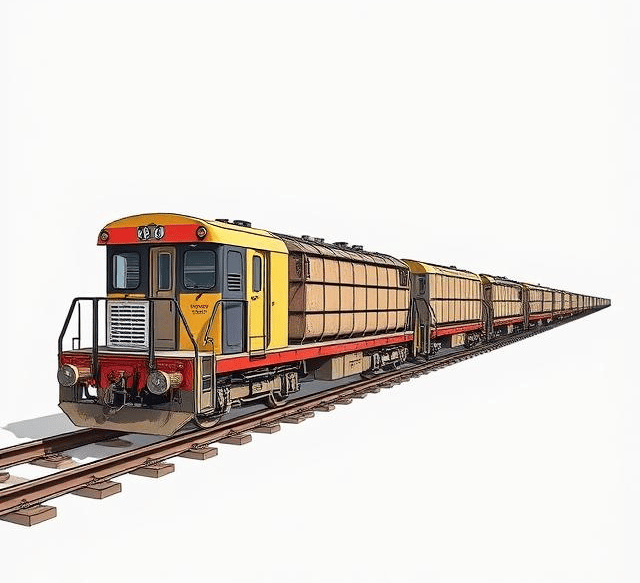
Freight rail connectivity between China and Central Asia has surged dramatically in 2025, signaling a significant evolution in Eurasian trade dynamics. In the first half of the year, 7,349 freight train trips were recorded along key China–Central Asia routes, marking a 25 % increase compared to the same period in 2024. Total cargo volume between Kazakhstan and China for January–April 2025 reached 11.4 million tonnes, up 13 % year-on-year, with 6.2 million tonnes passing via Dostyk–Alashankou (up 5 %) and 5.2 million tonnes via Altynkol–Khorgos (up 24 %). Container traffic is rising even faster; Dostyk–Alashankou handled approximately 693,800 TEUs in 2024, a 38.6 % increase from 2023. Across all China–Central Asia corridors, freight volume exceeded 23.2 million tonnes in the first eight months of 2025, with cumulative rail runs surpassing 69,000 trips, transporting over 5.19 million TEUs. These statistics underscore the rapid growth and strategic importance of rail links connecting China with Central Asia, offering faster delivery times and an alternative to maritime transport, while integrating Central Asian economies into global supply chains.
Infrastructure improvements have been central to supporting this growth. Kazakhstan has invested heavily in border facilities, modern dry ports, expanded track capacity, and automated customs procedures, ensuring that the rail corridors can handle rising volumes efficiently. Key corridors such as the Trans-Caspian International Transport Route (TITR), which links China through Kazakhstan and the Caspian Sea to Azerbaijan and Europe, have also seen significant throughput increases. Modernization efforts include new rolling stock, upgraded signaling systems, and enhanced terminal logistics, enabling faster transit of both bulk commodities and containerized goods. The expansion of these corridors not only strengthens China’s Belt and Road connectivity objectives but also transforms Central Asia into a critical transit hub for East-West trade, facilitating export opportunities and industrial growth within the region.
The growth of China–Central Asia freight rail has far-reaching economic and geopolitical implications. For China, these rail corridors provide a reliable and efficient channel for both manufactured goods and raw materials, enhancing trade resilience amid global supply chain disruptions. For Central Asian countries, the rail boom generates substantial transit revenue, fosters regional integration, and promotes economic diversification. By providing a faster and more reliable alternative to traditional sea and road routes, the corridors also strengthen the strategic position of the region within Eurasia’s evolving logistics networks. As additional crossings and upgrades continue to be implemented, the rail network is expected to expand further, reinforcing Central Asia’s role as a major artery of international trade and highlighting the increasing importance of rail as a backbone for transcontinental commerce.