Europe’s Rail Revolution: Digital Communication and the Road to FRMCS
Source: UIC
12/10/20252 min read
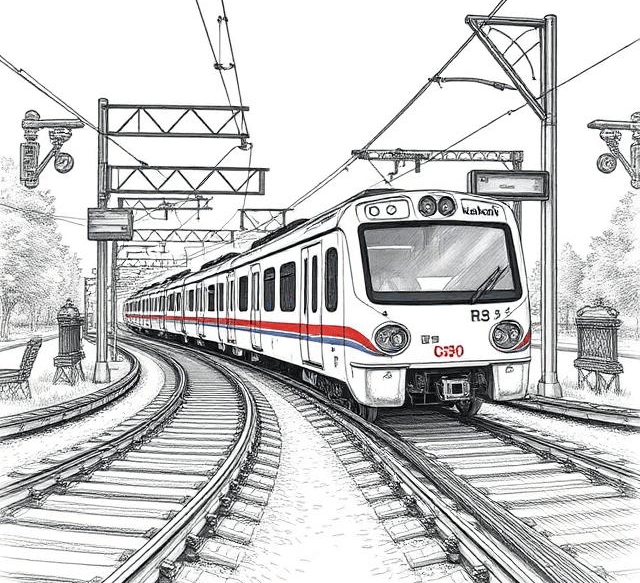
Europe’s railway networks are on the cusp of a major technological transformation. Across the continent, rail operators and infrastructure managers are preparing to phase out the decades-old GSM‑R (Global System for Mobile Communications – Railway) networks, which have long served as the backbone of railway communication and signaling. The replacement system, known as FRMCS (Future Railway Mobile Communication System), is built on advanced 5G technology and promises to revolutionize how trains are controlled, monitored, and managed. This transition is not merely a technological upgrade; it is a strategic initiative aimed at addressing long-standing limitations of legacy systems, enhancing safety, increasing network capacity, and enabling seamless cross-border operations across Europe’s complex rail corridors. The GSM‑R system, though reliable for decades, is constrained by its limited bandwidth, aging infrastructure, and inability to support modern digital applications. As rail traffic grows and the demands of passengers and freight operators evolve, the push for a more robust, flexible, and future-ready communication platform has become imperative.
FRMCS is designed to be more than just a replacement; it represents a fundamental modernization of European rail communications. Leveraging the capabilities of 5G, the system offers higher data speeds, ultra-low latency, and enhanced network reliability, allowing real-time communication between trains, signaling centers, and control rooms. One of the critical advantages of FRMCS is its ability to support advanced train control systems, including the European Train Control System (ETCS), which underpins the safety and efficiency of high-speed rail networks. Moreover, FRMCS will facilitate the integration of Artificial Intelligence (AI) applications for predictive maintenance, traffic optimization, and automated operations. By enabling trains to communicate continuously with infrastructure and each other, operators can implement dynamic scheduling, reduce delays, and respond swiftly to emergencies. Beyond operational efficiency, the system also strengthens safety by providing more accurate train positioning, collision avoidance alerts, and automated interventions in hazardous scenarios. For freight operations, the enhanced communication capabilities can improve cargo tracking, optimize train paths, and increase network utilization, providing economic benefits to rail companies and their customers alike.
Cross-border interoperability is another cornerstone of the FRMCS initiative. Europe’s railway network is highly interconnected, with trains routinely traveling across national borders. Legacy GSM‑R systems were often implemented differently in various countries, creating technical and administrative barriers to seamless operations. FRMCS, with its standardized 5G-based architecture, allows trains from one country to communicate directly with signaling and control systems in another, reducing handover delays and eliminating compatibility issues. This harmonization supports Europe’s broader transport strategy of creating an integrated, efficient, and environmentally sustainable rail network capable of competing with road and air transport. In addition, FRMCS is designed with scalability in mind, ensuring that rail networks can adapt to future technological advances without requiring complete infrastructure overhauls. As countries gradually roll out FRMCS, training programs, pilot projects, and collaboration between operators, manufacturers, and regulatory authorities are underway to ensure smooth implementation. The adoption of FRMCS marks a milestone in the ongoing digitalization of European railways, heralding a future where rail travel is faster, safer, smarter, and more sustainable than ever before.