
Hydrogen on the Rails: A New Era Begins for Britain’s Low-Carbon Transport
Source: Railway Network
12/9/20252 min read
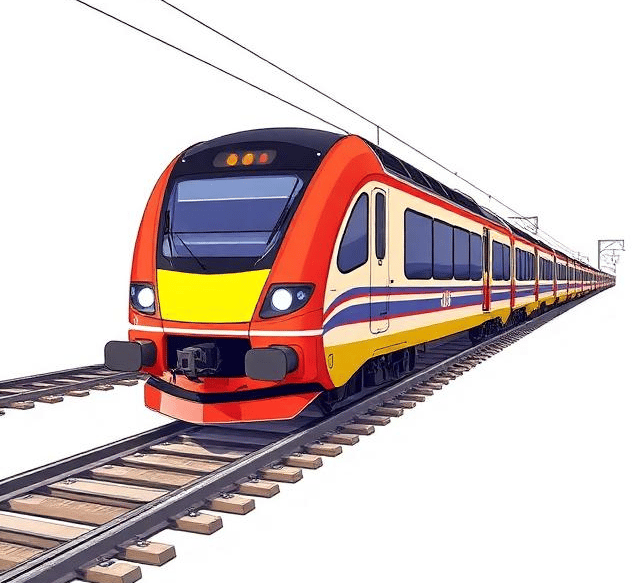
Britain’s railway network reached a pivotal technological and environmental milestone with Network Rail’s first-ever transport trial involving hydrogen on active rail infrastructure. This breakthrough marks more than a technical experiment — it represents a strategic step toward decarbonising one of the country’s largest and most essential transport systems. Hydrogen has long been considered a promising clean-energy vector, and its introduction into real railway operations demonstrates that the UK is now testing practical ways to shift from diesel dependence toward a low-carbon future. The experiment involved moving hydrogen tanks along a controlled section of the railway to evaluate logistics, safety procedures, and operational integration. Because hydrogen is both extremely energy-dense and highly flammable, its transport requires rigorous handling protocols, meticulous route planning, and close coordination between engineers, safety regulators, rolling-stock specialists and emergency-response teams. Successfully completing this first run proves that the foundational systems — signalling, loading infrastructure, containment technology and trained personnel — are capable of handling hydrogen safely within the railway environment. It also positions the UK as an early mover in hydrogen-enabled freight transport, a sector expected to grow rapidly as industries search for scalable decarbonisation solutions.
Beyond the immediate technical achievement, the trial signals a broader transformation underway across Britain’s transport sector. Heavy freight has remained one of the more difficult domains to decarbonise: diesel locomotives still dominate long-distance services, particularly on routes where electrification remains incomplete or financially challenging. Hydrogen offers a potential way to bridge this gap. It can be produced using renewable energy — yielding so-called green hydrogen — and converted back into power through fuel-cell systems with zero harmful emissions at the point of use. For rail, this could mean clean traction on routes where full electrification is impractical, offering a sustainable alternative without requiring thousands of kilometres of new overhead lines. The trial also hints at emerging supply-chain opportunities: green-hydrogen producers, fuel-cell manufacturers, rolling-stock companies and logistics operators all stand to benefit from an expanding hydrogen-rail ecosystem. Moreover, the trial’s success feeds into the UK government’s long-term rail decarbonisation strategy, which includes reducing greenhouse-gas emissions across all transport modes by the 2040s. With hydrogen now validated as a transportable commodity on the rail system, the next steps may include more extensive trials, prototype hydrogen-powered freight wagons, and the integration of hydrogen refuelling depots at key freight hubs.
Internationally, Britain’s venture into hydrogen transport places it among a small but rapidly growing circle of countries experimenting with hydrogen rail technologies. Germany has already deployed the Alstom Coradia iLint, the world’s first hydrogen fuel-cell passenger train, while France, Japan and the United States are pursuing parallel research programs. However, the UK’s emphasis on hydrogen freight — rather than exclusively passenger solutions — fills a significant gap in global innovation, as freight typically requires heavier loads, longer ranges and more rigorous safety standards. By enabling hydrogen transport itself, Network Rail is laying the operational groundwork for future hydrogen-powered locomotives and fuel-cell freight units. In the long term, hydrogen could reshape Britain’s rail-freight logistics by reducing reliance on imported diesel, lowering emissions for heavy industries, and enabling greener last-mile operations for ports and distribution centres. As climate pressures and energy-security concerns continue to rise, hydrogen offers a flexible and scalable pathway that complements electrification rather than competing with it. This first trial is therefore more than a symbolic event — it is the opening act in a new chapter of British rail innovation, one that may redefine how freight moves across the country for decades to come.