India’s Speed Revolution: E10 Shinkansen to Transform the Mumbai–Ahmedabad High-Speed Rail Corridor
Source: Ministry of External Affairs, Government of India
11/20/20253 min read
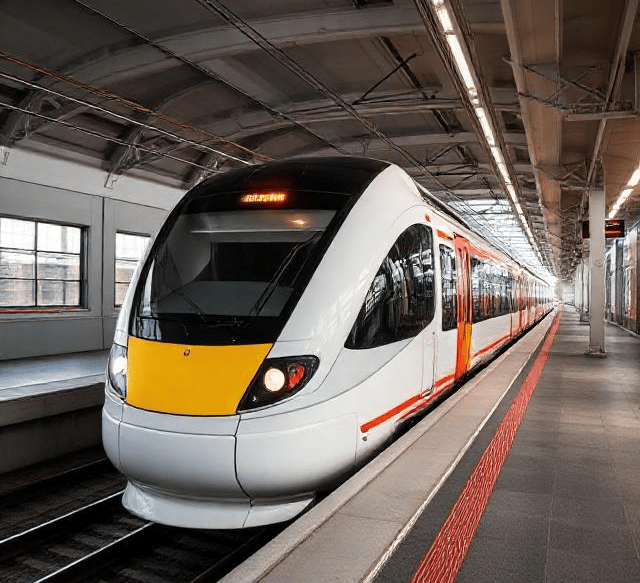
India’s Mumbai–Ahmedabad High-Speed Rail (MAHSR) corridor represents one of the most transformative infrastructure undertakings in the nation’s modern history, and the decision to introduce Japan’s next-generation E10 Shinkansen trains signals the depth of technological ambition behind the project. Conceived as India’s first true high-speed rail line, the 508-kilometre corridor is intended to demonstrate how the country can leapfrog traditional rail modernisation pathways and directly adopt world-leading systems. The E10 Shinkansen, an evolution of Japan’s long lineage of famed bullet trains, embodies a blend of speed, energy efficiency, passenger comfort, and unparalleled safety performance—attributes that India sees as essential for a corridor connecting two of its most dynamic metropolitan regions. What makes the collaboration particularly significant is how closely it aligns with India’s larger strategic goals: modernising long-haul mobility, reducing congestion on existing rail routes, and building a highly skilled domestic workforce through exposure to global best practices. For Japan, the project reflects a commitment to long-term partnership, technology transfer, and showcasing the latest iteration of its Shinkansen platform in one of the world’s fastest-growing economies.
The introduction of the E10 Shinkansen on Indian soil goes beyond simply deploying high-performance rolling stock; it also entails adapting and integrating advanced Japanese high-speed rail standards into the Indian operating environment. The train’s projected operating speed of around 320 km/h necessitates precise engineering of track geometry, viaducts, tunnels, and signalling systems, all built to Shinkansen specifications. This includes seismic-resilient infrastructure, advanced Automatic Train Control (ATC) systems, and a suite of aerodynamic features engineered to reduce noise and vibration—critical given the corridor’s mixture of urban, coastal, and subterranean terrain. The E10 design, with improved braking performance, optimised power distribution, and refined aerodynamics, is particularly well-suited to India’s first high-speed route, which features demanding engineering components such as long viaduct stretches and a landmark undersea tunnel section near Mumbai. To support this transition, India has invested heavily in training its engineers, drivers, maintenance technicians, and signalling specialists through capacity-building programmes structured with Japanese railway agencies. The planned phased introduction—initially through test operations with an older Shinkansen model before inducting the E10 fleet—ensures that Indian operators can gradually build the operational maturity needed for full-scale high-speed service. This approach is designed not only to guarantee safety and reliability from day one but also to cultivate a domestic skills ecosystem that can support future high-speed corridors across the country.
Economically and strategically, the Mumbai–Ahmedabad high-speed line is positioned to create a multiplier effect far beyond the realm of transportation. By reducing travel times between the two cities to roughly a third of current durations, the corridor is expected to reshape business travel patterns, ease pressure on aviation, and stimulate new economic clusters around station hubs in both states. The project has already encouraged large-scale domestic production of materials and components, strengthened India’s tunnelling and bridge-building capabilities, and generated considerable employment opportunities. The deeper significance lies in the long-term transfer of knowledge embedded within the project: through Japanese involvement in financing, technical collaboration, and on-ground training, India is laying the groundwork for a future network of high-speed corridors that can be partly indigenous in construction, assembly, and maintenance. Furthermore, the project symbolizes a diplomatic convergence between India and Japan as both nations seek stable, future-oriented partnerships in the Indo-Pacific region. While technological complexities, land acquisition challenges, and cost considerations remain part of the broader narrative, the momentum behind the MAHSR corridor reflects a shared belief that high-speed rail can be a catalyst for sustainable economic development, regional integration, and modernisation of public transport. With steady construction progress and a clear operational roadmap, the arrival of the E10 Shinkansen is set to mark the beginning of a new era—one in which India positions itself alongside global leaders in ultramodern rail travel and long-term mobility innovation.