Indonesia’s High-Speed Gamble: The Jakarta–Bandung Line Gets a Lifeline
Source: Asia daily
11/6/20252 min read
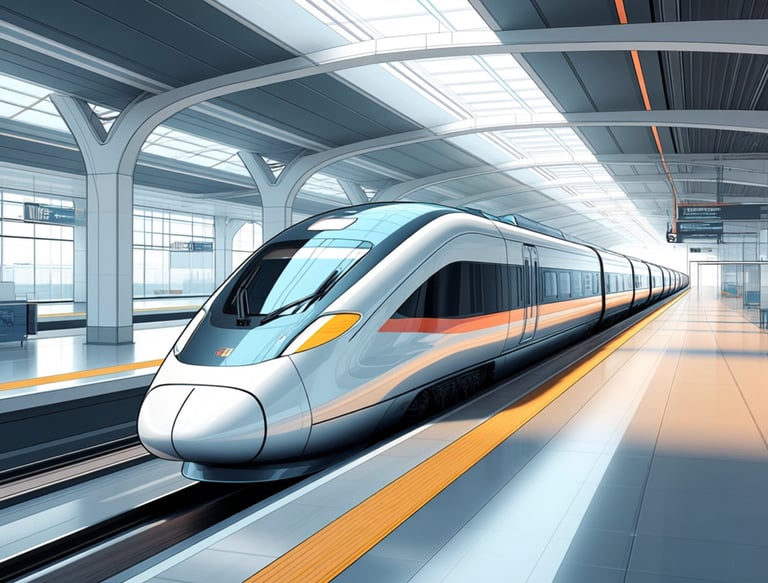
Indonesia’s flagship Jakarta–Bandung High-Speed Rail (HSR) has received renewed government backing as the state moves to stabilize the country’s most ambitious transport project amid mounting financial pressures. The 142-kilometer line, connecting Jakarta and Bandung in West Java, was conceived to cut travel time from more than three hours to just 40 minutes, serving as a showcase of Indonesia’s technological advancement and infrastructure modernization. Launched in 2015 as a collaboration between Indonesian and Chinese partners under the Belt and Road Initiative, the project has faced repeated hurdles — from escalating costs to land acquisition disputes and construction delays. Initially budgeted at around US$6 billion, the total investment has now surpassed US$8 billion. To keep it operational, the government has approved new state capital injections and allowed an increase in public ownership of the project company, PT Kereta Cepat Indonesia China (KCIC). President Prabowo Subianto’s administration reaffirmed its commitment to the HSR as a national strategic project, emphasizing that long-term infrastructure returns, not short-term profitability, will guide its policy direction.
The Jakarta–Bandung line, branded Whoosh, officially began limited commercial operations in 2023, making Indonesia the first Southeast Asian country to operate a true high-speed railway. The line runs at speeds of up to 350 km/h and features four main stations — Halim, Karawang, Padalarang, and Tegalluar — all connected to local commuter and feeder networks. Despite early enthusiasm, passenger demand has not yet met projections, leading to concerns about the system’s financial sustainability. The government’s latest intervention aims to stabilize KCIC’s balance sheet through debt restructuring and to ensure reliable service during its early years of operation. At the same time, feasibility studies are underway for an extension of the HSR corridor to Surabaya, a 700-kilometer link that would connect Jakarta to East Java. This extension, overseen by the Ministry of Transportation and the National Strategic Projects Committee (KPPIP), is expected to be financed through a blend of public funds, private investment, and foreign partnerships. Once complete, it would create a continuous high-speed line connecting Indonesia’s largest economic zones, transforming mobility along Java — the country’s most densely populated and economically vital island.
The Jakarta–Bandung project has broader regional and geopolitical significance. It stands as a key case study in Southeast Asia’s high-speed rail development, influencing the direction of future regional transport corridors. For Indonesia, the line is part of a wider government agenda to modernize national rail networks, as reflected in the Ministry of Transportation’s 2025–2035 National Railway Master Plan, which includes new electrified and high-capacity lines across Java, Sumatra, and Sulawesi. The project’s continuation also signals Jakarta’s determination to retain ownership control while still engaging with foreign partners on technology transfer and financing. Lessons from its early operational challenges are being used to design better frameworks for future projects, balancing economic feasibility with strategic infrastructure goals. With strong state backing, the Jakarta–Bandung High-Speed Rail is evolving from a symbol of ambition into a working model for sustainable, large-scale infrastructure delivery in Indonesia — one that could shape the future of Southeast Asian transport integration.