
Iran and Turkey Launch $1.6 Billion Strategic Railway Link to Strengthen Eurasian Trade
Source: Iran Gov
12/4/20252 min read
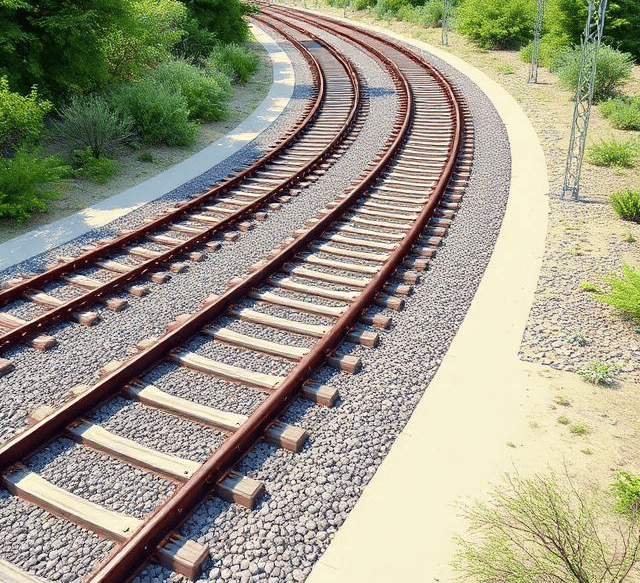
Iran and Turkey have officially agreed to invest $1.6 billion in a new strategic railway project designed to enhance freight connectivity across Eurasia. The rail link, which will connect key Iranian industrial and logistical hubs with Turkish rail infrastructure, is expected to provide a faster, more reliable corridor for cargo moving between Asia and Europe. The initiative represents a significant collaboration between the two countries, aiming to capitalize on their geographic positions as natural transit points between Central Asia, the Middle East, and European markets. By offering a high-capacity, modern rail link, the project is expected to reduce transit times, improve logistical efficiency, and provide an alternative to congested maritime and road freight routes, thereby strengthening trade flows and economic integration across the region.
The planned railway link will feature state-of-the-art freight handling facilities, double-track systems, and modern signaling and communication technologies to ensure safe and efficient operations. Both governments have emphasized that the corridor will be capable of supporting heavy freight trains, including containers, bulk goods, and industrial equipment, facilitating smoother and faster cross-border transport. The project will also include intermodal terminals at strategic points along the route, allowing seamless transfer between rail, road, and possibly maritime transport. Such infrastructure is critical for ensuring that freight volumes can be scaled efficiently while minimizing delays. Additionally, the new link is expected to integrate with Turkey’s existing rail network, which connects to Europe via multiple border points, and Iran’s northern corridors, which connect to Central Asian and South Asian markets, creating a continuous Eurasian rail corridor that could rival other long-distance trade routes.
Beyond the immediate logistical benefits, the $1.6 billion railway project has substantial economic, geopolitical, and environmental implications. Economically, the corridor is expected to stimulate trade, create jobs, and attract investment along the route, fostering industrial growth in regions surrounding the railway. Geopolitically, the collaboration signals deeper economic cooperation between Iran and Turkey, positioning both nations as strategic transit hubs in the emerging Eurasian trade landscape. Environmentally, shifting freight from road and air transport to rail significantly reduces carbon emissions, contributing to regional sustainability goals. If successfully implemented, the project could reshape traditional freight corridors, offering a competitive alternative to longer maritime routes through the Suez Canal or congested land routes via Central Asia. In the long term, this railway link could serve as a backbone for expanded Eurasian trade, enhancing economic connectivity between Asia and Europe and providing a durable, high-capacity transportation option for decades to come.