
Lithuania Awards €376 Million Contracts to Advance Rail Baltica High-Speed Rail Project
Source: LTG Infra
11/7/20252 min read
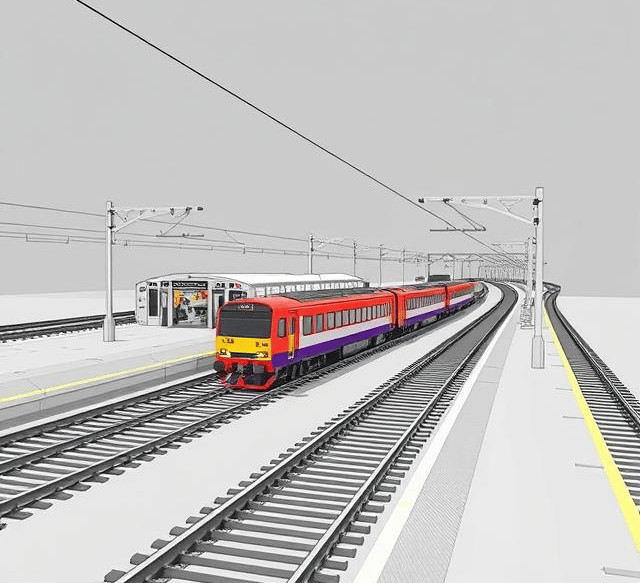
Lithuania has taken a major step forward in the construction of the Rail Baltica high-speed rail project, with LTG Infra, the country’s rail infrastructure manager, signing two contracts totaling approximately €376 million. The agreements cover the construction of 114 kilometers of new standard-gauge double-track railway infrastructure — a critical segment connecting Kaunas, Panevėžys, and the Latvian border. This section will form a vital part of the trans-European Rail Baltica corridor, designed to link the Baltic states with the wider European high-speed rail network. The project, co-funded by the European Union’s Connecting Europe Facility (CEF), is one of the largest transport infrastructure investments in Lithuania’s history. Construction will include bridges, embankments, culverts, and advanced signaling systems, adhering to European technical interoperability standards. The newly awarded contracts are expected to generate thousands of local jobs and provide significant stimulus to Lithuania’s construction and materials industries.
The €5.8 billion Rail Baltica megaproject aims to create a 870 kilometer high-speed standard-gauge railway running from Tallinn (Estonia) through Riga (Latvia) and Kaunas (Lithuania) to the Polish border, integrating the Baltic region into the core EU rail network for the first time. Trains on the line are expected to operate at speeds up to 249 km/h for passengers and 120 km/h for freight, dramatically reducing travel and transport times between the Baltics and Western Europe. The newly signed Lithuanian segment contracts follow earlier awards in Estonia and Latvia, marking accelerating momentum in the build-out phase after several years of planning and preparatory works. With full completion scheduled for 2030, Rail Baltica is projected to carry 16 million passengers and 20 million tonnes of freight annually, reshaping regional mobility and trade flows. Lithuania’s Ministry of Transport emphasized that the contracts demonstrate firm progress toward the EU’s strategic objective of enhancing north–south connectivity and achieving a more resilient, sustainable transport corridor across the region.
Beyond its transport significance, the Rail Baltica project embodies Europe’s green transition and commitment to reducing carbon emissions. By shifting a significant share of passenger and freight transport from road and air to rail, the corridor is expected to cut annual CO₂ emissions by up to 400,000 tonnes. The project also fosters economic integration between the Baltic states and Central Europe, facilitating investment, tourism, and logistics opportunities. In Lithuania, the infrastructure development is expected to boost local industry participation, strengthen supply chains, and attract new private investment in rail-linked industrial zones. With these contracts, LTG Infra and its partners have moved from design to full-scale construction, demonstrating tangible progress in one of the EU’s most ambitious rail connectivity programs. Rail Baltica thus stands not only as a symbol of European unity and cross-border cooperation but also as a long-term investment in sustainable economic growth for the Baltic region and beyond.