
Reconnecting Europe’s East: The Strategic Promise of the New Poland–Lviv European-Gauge Rail Link
Source: Ministry of development Ukraine
11/28/20252 min read

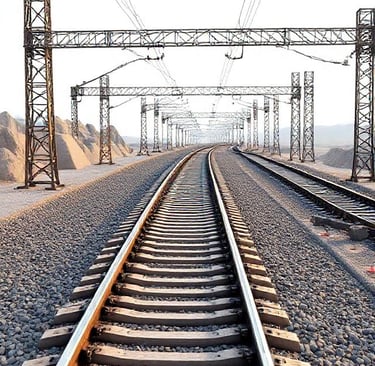
The announcement that construction will begin in 2026 on a new European-gauge railway line from the Polish border to Lviv marks one of the most significant rail-infrastructure developments in Eastern Europe in decades. As reported by United24 Media, the project aims to extend the standard 1,435-mm track gauge—used across the European Union—directly into western Ukraine, bypassing the traditional break-of-gauge that has long slowed freight and passenger movement between the two regions. For Ukraine, this represents both a symbolic and practical step forward, signaling a deeper alignment with European transport networks despite the ongoing challenges posed by conflict and reconstruction. For Poland and the EU, the project offers an opportunity to enhance east–west mobility, reduce logistical friction, and create a more coherent continental rail system. Because Lviv functions as Ukraine’s cultural and economic gateway to Europe, connecting it with European-standard rail is more than a transportation upgrade—it is a powerful expression of Ukraine’s European trajectory.
At the operational level, the new link promises transformative improvements in the speed, reliability, and efficiency of cross-border mobility. Today, trains traveling between Ukraine and Poland must undergo time-consuming gauge-change procedures or transfer cargo and passengers at border terminals—processes that can add hours or even days to travel times. Replacing this bottleneck with a continuous European-gauge line will eliminate a key structural inefficiency, enabling seamless rail journeys from Lviv into the heart of the EU rail network. Passenger services would gain faster, direct links to Polish cities such as Przemyśl, Rzeszów, Kraków, and Warsaw, while freight operators would be able to move goods without labor-intensive transshipment. This is particularly important for Ukraine’s export-driven industrial and agricultural sectors, which depend heavily on reliable land corridors due to restrictions on Black Sea shipping. Modern European-gauge infrastructure will also allow operators to use standard EU rolling stock, improving safety, interoperability, and service quality. The project forms part of a broader pattern in which Ukraine is systematically expanding its interoperability with European systems—from electricity grids and customs processes to digital borders and now, increasingly, rail transport.
Beyond the immediate improvements in logistics and mobility, the long-term implications of this project extend into geopolitics, regional development, and post-war reconstruction. A high-capacity, fully interoperable rail corridor linking Lviv with the EU supports Ukraine’s integration into the Trans-European Transport Network (TEN-T), which the European Commission has already proposed expanding eastward. Such infrastructure will accelerate trade, support reconstruction of damaged supply chains, and bolster economic convergence between Ukraine and its western neighbours. It also strengthens regional cooperation by enabling cross-border industrial clusters, tourism flows, university partnerships, and expanded cultural exchange. In geopolitical terms, the new rail link reduces Ukraine’s historical dependence on eastward rail connections and reinforces its westward orientation—aligning transport policy with the country’s broader strategic goals. As reconstruction accelerates, the Poland–Lviv rail line could become the spine of a wider network of European-gauge corridors extending deeper into Ukraine, potentially connecting Kyiv and even Odesa in the future. In this sense, the 2026 project launch represents not only a necessary infrastructure upgrade but also a turning point for Ukraine’s long-term integration with Europe. The line promises to reshape mobility, trade, and cooperation across the region—helping to knit Ukraine more firmly into the European economic and political space at a moment when such alignment carries historic significance.