
Revitalizing the Kinshasa–Kongo Rail Corridor: A Step Toward Regional Connectivity
Source: Ecofin Agency
11/3/20252 min read
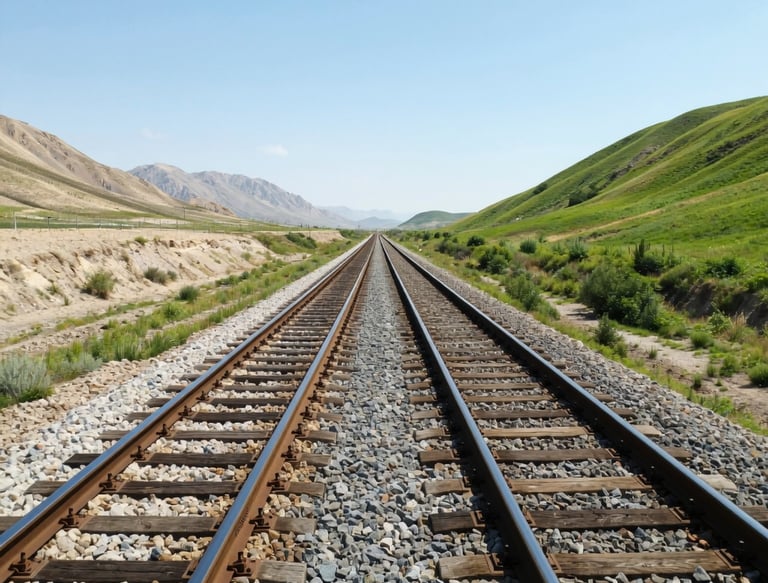
In recent weeks, the pivotal rail corridor linking Kinshasa with Kongo‑Central Province has edged closer to full operational status, following a successful technical inspection of the line. A locomotive pulling several coaches conducted a test run over the route—passing through the Kasangulu area—to evaluate both track integrity and rolling‑stock condition. The inspection, organized by local authorities, signalled that the months of planning and rehabilitation may soon come to fruition in the formal relaunch of rail service. For many commuters, freight operators, and local residents, this marks more than just a transport event—it represents the revival of an essential link in a region where road congestion and logistics bottlenecks have long undermined mobility and economic efficiency.
The significance of reinstating the rail link cannot be overstated. The corridor has served as a key conduit between the capital and the province—providing not only a passenger alternative to heavily congested roads but also a more efficient channel for regional freight. Historically, the adjacent route via National Road No. 1 has borne the bulk of cargo traffic, especially to and from the port area of Matadi. With the rail line poised to resume operations, planners expect relief for the overburdened highway, reductions in transit time and costs, and improved reliability for goods ranging from agricultural produce to container shipments. On the social front, a restored rail service would enhance accessibility for commuters living along the corridor—providing an alternative to road transport, reducing travel-time stress, and potentially stimulating economic activity in smaller towns and peri‑urban zones along the alignment.
Looking ahead, the rail reactivation is also part of a broader strategic vision for the country’s transport infrastructure. The current efforts are being undertaken in tandem with upgrades to the rolling‑stock fleet—such as the acquisition of new railcars and container wagons financed via the “Redevance Logistique Terrestre” (RLT) mechanism. In parallel, the government has initiated feasibility studies for an extension of the corridor toward the deep‑water port at Banana via Boma—adding a prospective 150 km of rail link that would further integrate the national network and strengthen the country’s role in regional logistics. With the relaunch of the Kinshasa–Kongo link serving as a tangible first step, the momentum appears to be gathering for a broader transformation of the DRC’s rail system—from underutilized infrastructure to a backbone for national connectivity and economic resilience.