
Transforming Northern Chhattisgarh: Major Railway Expansion Set to Boost Connectivity and Growth in Ambikapur Region
Source: Times of India
12/5/20252 min read
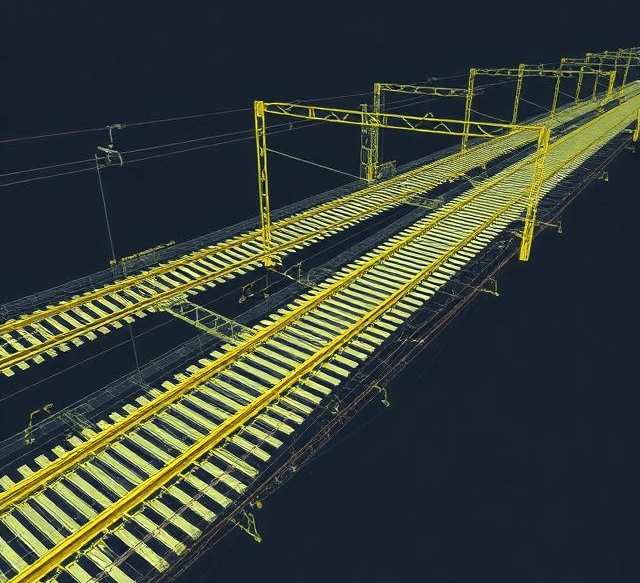
Northern Chhattisgarh is on the cusp of a transformative shift in rail infrastructure, as India’s national rail authorities green-light multiple major projects aimed at expanding connectivity in and around Ambikapur. The approved plans include doubling existing tracks, constructing new lines spanning hundreds of kilometers, and creating alternative routes to improve both passenger and freight capacity. Specifically, the 80 km doubling project between Boridand and Ambikapur, alongside new lines such as the 262 km Ambikapur–Ramanujganj–Barwadih link and the 218 km Sardega–Pathalgaon–Ambikapur route, exemplify a deliberate push to enhance mobility and operational efficiency in the region. These initiatives are part of a broader national strategy to accelerate rail expansion in underserved areas, aiming to reduce travel times, increase train frequency, and provide reliable connectivity to remote districts. According to official sources, project contracts for these expansions have been awarded at significant costs, with the doubling and new line constructions collectively estimated at over ₹12,000 crore, encompassing track laying, signaling systems, station modernization, and environmental compliance. This investment reflects not only the physical construction of rail lines but also the integrated development of supporting infrastructure such as bridges, tunnels, and level crossings, ensuring the projects are both sustainable and future-proof.
Beyond the sheer scale of construction, the Ambikapur railway expansion carries profound economic and social implications. Improved rail infrastructure is expected to facilitate the movement of freight, particularly minerals, agricultural products, and manufactured goods, from resource-rich districts to industrial and urban centers. The Ambikapur–Ramanujganj–Barwadih line, for example, provides a critical corridor linking Chhattisgarh with Jharkhand, enabling faster and more efficient transport of industrial commodities while reducing road congestion and vehicle emissions. For passengers, the doubling of Boridand–Ambikapur tracks and the new Sardega–Pathalgaon–Ambikapur route will shorten travel times, expand service frequency, and improve reliability, particularly during peak travel periods. These improvements will make daily commuting, intercity travel, and regional trade considerably more convenient, fostering greater integration between northern Chhattisgarh and neighboring states. Furthermore, by connecting previously isolated or underserved communities to larger urban hubs, these rail lines will open access to education, healthcare, and employment opportunities, thereby enhancing socio-economic development and reducing regional disparities.
The strategic financial and policy backing for these projects underscores the government’s commitment to rail-led regional development. Annual budget allocations for railway expansion in Chhattisgarh have surged from approximately ₹311 crore per year during 2009–2014 to over ₹6,925 crore in 2025–26, a reflection of both political will and long-term vision. This funding supports a comprehensive project pipeline that covers land acquisition, environmental clearances, utility relocation, station modernization, and advanced signaling systems, ensuring that the infrastructure is safe, reliable, and capable of handling future growth. By integrating new construction with track doubling and operational improvements, the Ambikapur rail expansion aims to create a resilient, high-capacity corridor that can accommodate rising passenger and freight demand. As these projects move from planning to execution, northern Chhattisgarh is poised for a substantial transformation: improved connectivity, accelerated regional economic activity, and enhanced social mobility, all supported by a modern rail network that could serve as a model for other underserved regions across India. Ultimately, this ambitious infrastructure initiative represents a decisive step toward bridging the development gap, promoting sustainable growth, and unlocking the latent potential of one of India’s most resource-rich yet historically isolated regions.