Wabtec Unveils “Pathfinder” Retrofit Solution for Autonomous Locomotive Operations
Source: Wabtech
7/11/20242 min read
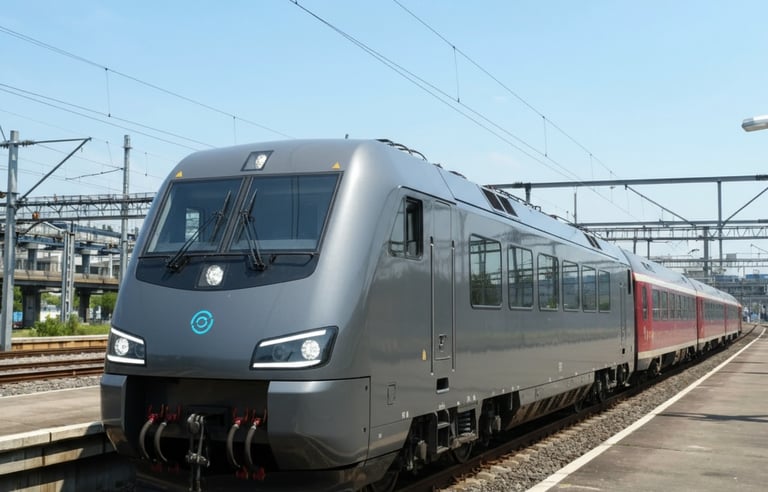
Wabtec has introduced its new “Pathfinder” concept, a groundbreaking initiative aimed at retrofitting existing locomotives with advanced digital technologies to enable semi-autonomous and fully autonomous operations. Unlike traditional approaches to automation that require entirely new rolling stock, Pathfinder focuses on upgrading the current locomotive fleet with state-of-the-art sensors, control systems, and artificial intelligence (AI)-driven software. This approach allows rail operators to enhance safety, efficiency, and operational consistency without incurring the significant capital expenditure associated with purchasing new locomotives. The Pathfinder system can monitor track conditions, control speed, and assist with braking, while providing real-time feedback to train operators, ensuring that human oversight remains integral to safety protocols. By integrating AI and machine learning, the system can also optimize fuel efficiency and reduce wear on mechanical components, extending the lifespan of existing rolling stock.
The Pathfinder concept represents a strategic shift in the railway industry, where digital transformation is increasingly focused on upgrading legacy systems rather than replacing them outright. Wabtec’s retrofit solution enables incremental deployment, meaning that rail operators can introduce autonomous capabilities in phases, adapting to regulatory, operational, and infrastructure constraints. The system also supports predictive maintenance by continuously collecting data on locomotive performance, which can be analyzed to anticipate component failures and schedule interventions proactively. This reduces unscheduled downtime and operational disruptions while lowering maintenance costs. Moreover, semi-autonomous locomotives can improve crew productivity and safety, particularly in repetitive freight operations, by reducing human error and fatigue-related risks. For rail networks facing tight schedules and high traffic density, Pathfinder offers a scalable pathway toward next-generation operational efficiency.
In parallel, other innovations are emerging that challenge traditional rail engineering concepts. For example, an Italian company recently tested maglev technology on conventional tracks, allowing vehicles to levitate slightly above the rails. This reduces friction and energy consumption without requiring a complete overhaul of existing rail infrastructure, making it a practical approach for integrating futuristic technologies into today’s networks. Combined with initiatives like Pathfinder, such innovations demonstrate a broader industry trend toward sustainable, technology-driven modernization. Retrofitting locomotives with autonomous systems and experimenting with friction-reducing levitation techniques signal a future where rail networks are safer, greener, and more cost-effective, leveraging both digital and physical innovations to meet growing transportation demands while minimizing environmental impact.